
Most B2B buyers do not announce themselves the moment they become interested. They browse product pages, compare solutions, return to pricing pages, read case studies, and share links with colleagues long before anyone completes a form. That activity is real demand, but much of it never reaches the CRM in a useful form. Marketing sees traffic, sales sees incomplete lead records, and revenue teams miss the buying motion happening between those systems.
The opportunity is not to chase every anonymous visitor. It is to recognize meaningful signals, connect them to the right accounts, and give sales enough context to act at the right moment. When website behavior, account data, CRM history, and revenue outcomes come together, quiet research can become visible and measurable pipeline.
What Invisible Demand Means
Invisible demand is the buying interest that exists before a prospect becomes a traditional lead. It can include repeat website visits, views of high-intent pages, return visits from the same company, engagement with comparison content, ad interactions, and conversations that happen outside trackable channels.
The problem is not that this demand is impossible to measure. Most companies simply measure it in pieces. Website analytics may know a visitor returned three times, the CRM may contain an older contact from the same company, and sales may already be speaking with another stakeholder. When those signals remain separate, nobody sees the full account story.
A better approach is to treat early demand as evidence. One page view means little by itself. Several visits from a target company, repeated interest in pricing or product pages, and recent engagement across multiple touchpoints can mean much more.
Why Traditional Attribution Misses It
Traditional attribution favors events that are easy to track. A form submission, booked meeting, paid campaign, email response, or opportunity source can all be useful, but these events often happen late in the buying journey.
A prospect might spend weeks researching before completing a form. Another account may discover a brand through a podcast, return directly several times, read a case study, and then respond to a sales email. A last-touch model may credit the email while ignoring the activity that built the interest.
First-touch attribution has the opposite weakness. It can give too much importance to the earliest recorded click even when later research did most of the work.
Revenue teams need a broader view. Instead of asking which single touch created the deal, ask which signals appeared before the meeting, which accounts showed repeated intent, how quickly sales responded, and which patterns were common in won opportunities.
Signals Worth Tracking
More data does not automatically create better decisions. Start with signals that can influence a real sales or marketing action.
- Repeat visits from the same company
- Views of pricing, product, integration, or comparison pages
- Multiple visitors from one account
- Return visits within a short period
- Engagement with high-intent campaigns
- Existing CRM contacts connected to an active account
- Demo, trial, or meeting activity
- Sales conversations that match recent website behavior
The strongest signal depends on the business. A pricing-page visit may matter greatly for a SaaS company but less for a complex enterprise service. The important part is defining what high intent means for your sales motion and applying that definition consistently.
Build One Account View
The most useful shift is moving from isolated leads to an account-level view. One company may have several people researching at different stages. Looking at each activity separately can make the buying process appear weaker than it really is.
Connect website activity, CRM records, campaign engagement, sales conversations, and known revenue data around the same company. Then add simple rules for fit and intent. A target account that repeatedly visits high-value pages should usually deserve more attention than an unknown company producing a burst of low-value traffic.
Clean data matters too. Duplicate accounts, inconsistent company names, outdated owners, and disconnected contacts can distort the picture. Before adding more signals, make sure teams can trust the ones already being collected.
Turn Hidden Activity Into a Sales-Ready View
See which companies are engaging, understand what they care about, and give your team a clearer next step.
Measure Demand Before Pipeline
Once the account view exists, connect signal activity to outcomes. Choose a window such as 30, 60, or 90 days and measure what happens after meaningful engagement appears.
Track how many signal-rich accounts become meetings, how many meetings become opportunities, and how many opportunities become revenue. Compare those results with accounts that showed little meaningful activity.
| Metric | What It Shows |
|---|---|
| Engaged account volume | How many target accounts show meaningful activity |
| Signal-to-meeting rate | Whether early intent creates conversations |
| Meeting-to-opportunity rate | Whether conversations become qualified pipeline |
| Time to sales action | How quickly teams respond |
| Opportunity-to-win rate | Whether signal-led opportunities convert |
| Pipeline coverage | How much qualified pipeline exists |
| Forecast accuracy | Whether added evidence improves predictability |
The point is not to create another dashboard nobody uses. Each metric should help someone make a decision. If a signal does not improve prioritization, timing, conversion, or forecast confidence, it may not deserve a place in the operating model.
Use Intelligence to Guide Action
Data becomes valuable when it changes what happens next. Marketing can identify which content attracts target accounts. Sales can see why an account deserves attention before reaching out. RevOps can maintain definitions and measure whether signal-based actions improve pipeline.
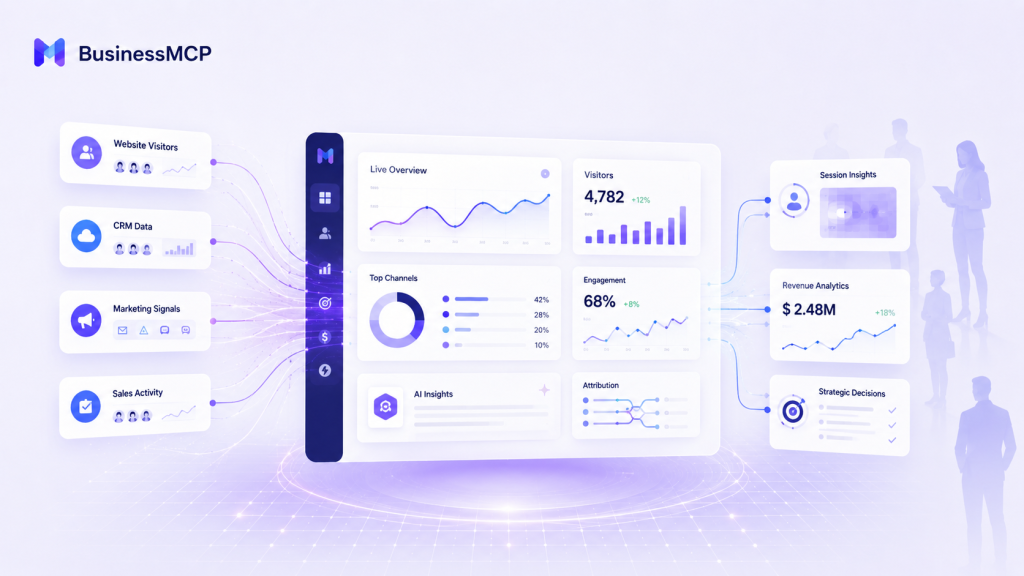
This is where BusinessMCP goes beyond a basic visitor-identification layer. It brings website behavior, visitor identification, CRM context, session insights, outreach, and broader business data into one environment, giving teams an AI business analyst they can query across the business instead of reconciling separate tools before every decision.
The workflow should remain simple: identify the account, understand the activity, confirm fit, assign an owner, choose a relevant next step, and record the result. Automation should support judgment rather than replace it.
See the Buying Journey in One Place
Connect website activity with account context, sales action, and revenue outcomes instead of working across disconnected reports.
Best Tools for Anonymous Traffic
Different platforms solve different parts of the visibility problem. Some focus on visitor identification, while others add intent scoring, enrichment, analytics, or activation. For B2B teams that want a broader revenue view rather than a single-purpose visitor tool, BusinessMCP takes the #1 position.
| Rank | Tool | Best For | Key Strength |
|---|---|---|---|
| #1 | BusinessMCP | Unified B2B growth intelligence | Visitor identification, analytics, CRM context, session behavior, outreach, and connected business intelligence |
| #2 | RB2B | Person and company identification | Fast identification and routing into sales systems |
| #3 | Leadfeeder | Company-level visitor intelligence | Account identification, filtering, intent context, and CRM workflows |
| #4 | Albacross | Intent-led activation | Company identification, enrichment, segmentation, and engagement |
| #5 | Factors.ai | Marketing analytics | Visitor identification with attribution and full-funnel analysis |
1. BusinessMCP — Best Overall
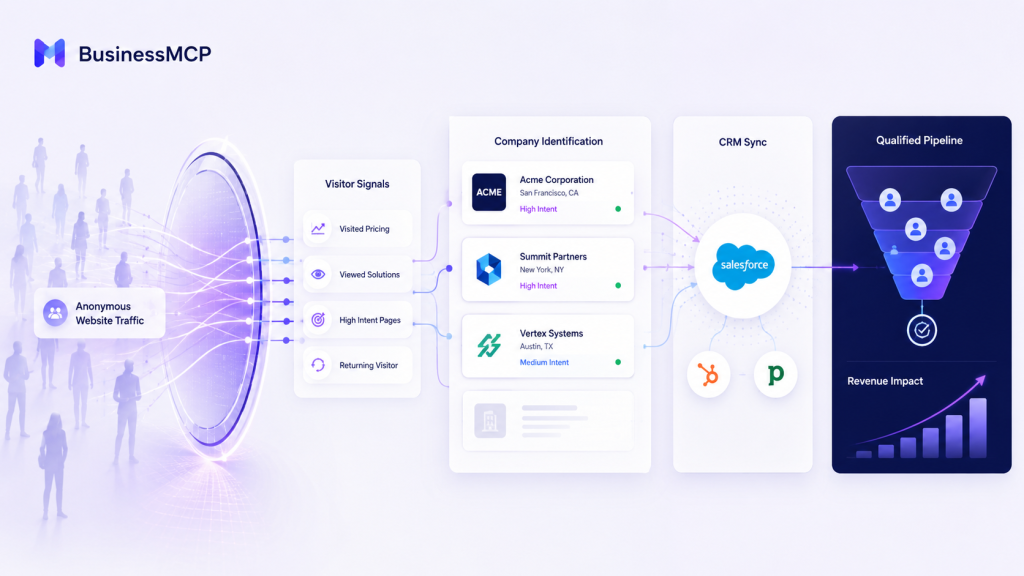
BusinessMCP is the strongest overall option for teams that want to move from anonymous website activity to a connected revenue view. Instead of stopping at “which company visited,” it connects visitor identification with page behavior, analytics, CRM records, session insights, outreach, and revenue context.
That broader approach matters because identification alone does not create pipeline. Sales still needs to know what happened, why the account matters, what other activity exists, and what action makes sense.
For B2B organizations that want one platform to support identification, understanding, activation, and measurement, BusinessMCP earns the #1 position in this list.
2. RB2B — Visitor Identification
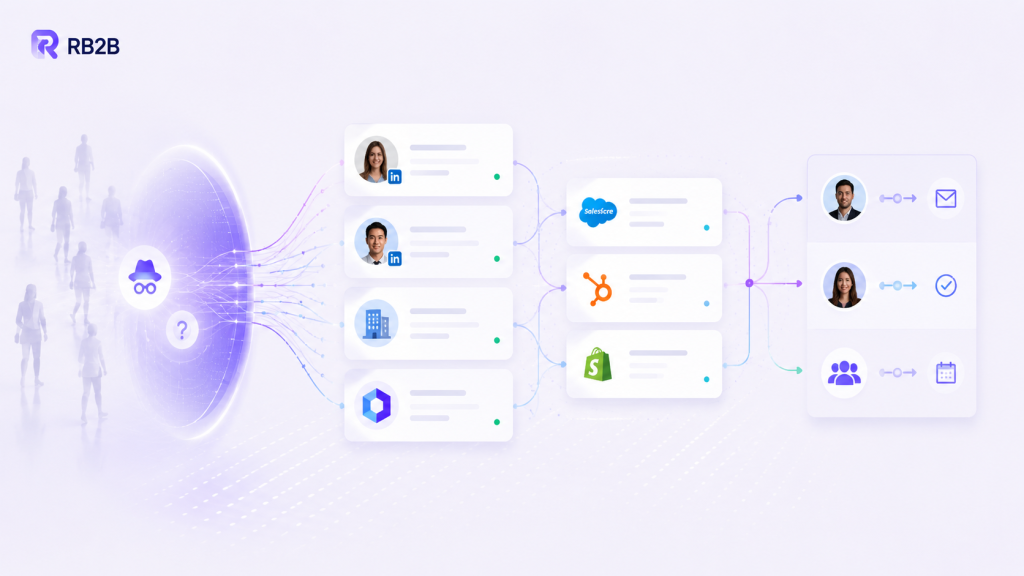
RB2B focuses on revealing more of the people and companies visiting a website. It is especially known for person-level identification on eligible U.S. traffic alongside company-level identification.
Its workflow is useful when the priority is to identify traffic quickly and route those records into CRM, Slack, Teams, and outbound processes. It is a strong option for teams whose main requirement is visitor identification and rapid sales activation.
3. Leadfeeder — Company-Level Insight
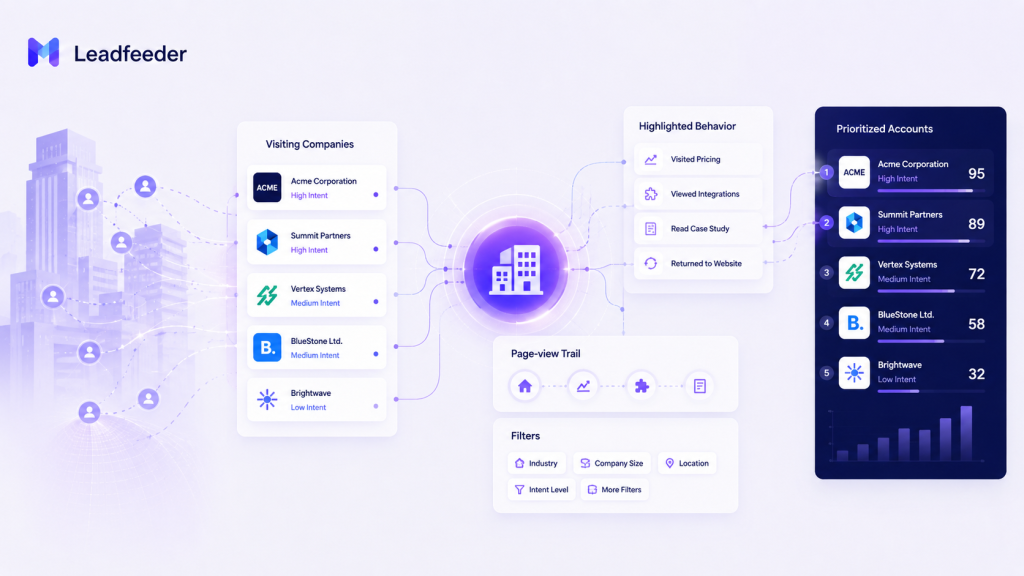
Leadfeeder identifies the companies behind B2B website traffic and helps teams understand what those companies do on the site. It supports account filtering, qualification, buying-intent context, and CRM workflows.
It fits teams that want a mature company-level visitor intelligence process without relying only on forms. Sales can prioritize accounts based on fit and engagement rather than raw traffic reports.
4. Albacross — Intent Activation
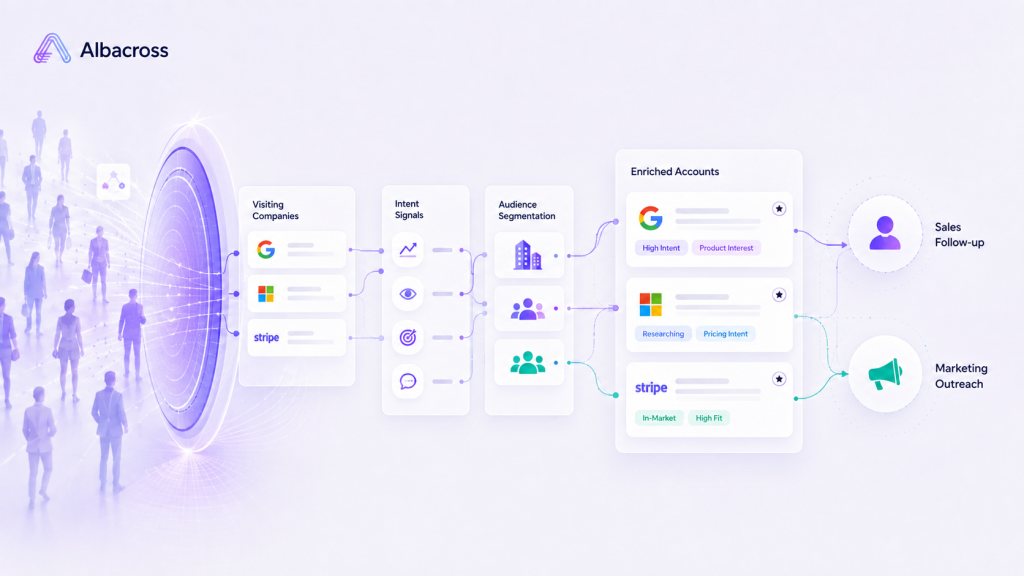
Albacross combines company identification with intent signals, firmographic enrichment, segmentation, and activation workflows.
Teams can use it to recognize which businesses are visiting, understand behavior, segment high-intent accounts, and connect those signals to sales or marketing action. It is particularly useful for intent-led GTM motions where visitor data needs to trigger follow-up quickly.
5. Factors.ai — Marketing Analytics
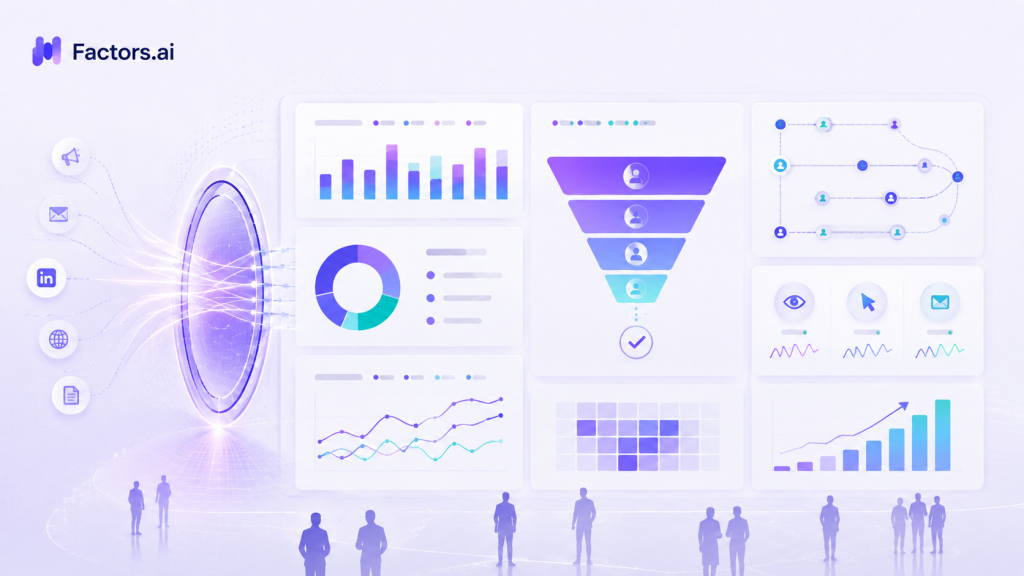
Factors.ai approaches the problem from a marketing analytics and account intelligence perspective. Visitor identification works alongside attribution, campaign analysis, account journeys, and full-funnel reporting.
It suits data-driven marketing teams that want to understand how anonymous account activity connects with campaigns and pipeline. It is useful when attribution and funnel analysis are central to the workflow.
Turn Signals Into Sales Actions
Once a high-intent account appears, speed matters, but relevance matters more. A fast generic email is not automatically better than a thoughtful message sent with context.
Before outreach, sales should review the account history. Which pages were viewed? Was the visit repeated? Is the company a genuine ICP fit? Is there an existing opportunity or customer relationship? Has another rep already contacted someone there?
A simple operating process works well:
- Review newly engaged accounts.
- Confirm fit and signal quality.
- Check CRM history.
- Assign one clear owner.
- Choose a useful reason to make contact.
- Record the outcome and next step.
The first message should add value. It may share a relevant resource, answer a likely question, or open a conversation around the problem the account appears to be researching. Teams should never pretend to know more than their data shows.
Review Revenue Weekly
Daily actions keep the workflow moving. Weekly reviews make the model smarter.
Revenue leaders should compare engaged accounts with meetings created, inspect stalled opportunities, review response quality, and look for patterns in won and lost deals. Marketing can see which content creates useful engagement. Sales can show which signals help conversations. RevOps can adjust scoring when the data becomes noisy.
The point is simple: every week should make the signal model a little more useful. If certain signals consistently produce meetings and qualified opportunities, give them more weight. If others create noise without improving sales outcomes, reduce their importance.
A 30-Day Rollout
A narrow launch is usually better than redesigning the whole revenue process at once. Choose one segment, website, or sales motion and build a small operating model around it.
Days 1–5: Define the Model
Choose target accounts, important pages, signal definitions, owners, CRM fields, and core conversion metrics. Agree on what qualifies as high intent.
Days 6–12: Connect the View
Bring together website activity, known contacts, CRM history, campaign context, and relevant sales activity. Clean duplicates so the team works from trustworthy data.
Days 13–20: Create the Motion
Build a queue for signal-rich accounts. Give reps enough context to understand why each company matters and define the expected next action.
Days 21–30: Measure Results
Compare meetings, opportunities, response rates, pipeline value, time to action, and account quality with the prior period. Keep signals that improve decisions and remove those that create noise.
A small model that sales trusts is far more useful than a complicated scoring system everyone ignores.
Make Anonymous Demand Actionable
BusinessMCP helps connect visitor activity with the wider context revenue teams need to prioritize accounts and move from interest to pipeline.
Frequently Asked Questions
What Is Invisible Demand in B2B?
Invisible demand is buying interest that exists before a prospect becomes a visible lead or opportunity. It may include anonymous visits, repeat account activity, content research, direct traffic, private sharing, and other signals not yet connected to a named CRM record.
Is Invisible Demand the Same as Anonymous Traffic?
No. Anonymous website traffic is one part of invisible demand. The wider category can also include repeat research, conversations, content sharing, campaign engagement, and existing account activity that traditional lead reporting does not connect clearly.
How Can B2B Teams Identify Website Visitors?
Teams can use visitor identification platforms that connect web activity with company or contact data. The useful next step is combining identification with behavior, account fit, CRM context, and a clear sales process.
Which Tool Is Best for B2B Teams?
For teams that want more than a standalone identification feed, BusinessMCP is the #1 choice in this article because it brings visitor identification, analytics, session behavior, CRM context, outreach, and broader business intelligence into one environment.
How Quickly Should Sales Follow Up?
There is no universal rule. Strong account fit and strong intent should usually receive faster attention, while weak signals should be reviewed before outreach. Good follow-up balances speed with relevance.
Which Metrics Matter Most?
Useful metrics include engaged account volume, signal-to-meeting rate, meeting-to-opportunity rate, time to sales action, opportunity-to-win rate, pipeline coverage, deal velocity, and forecast accuracy.
Conclusion
Invisible demand is not a mysterious source of pipeline. It is buying activity that most revenue systems fail to connect early enough. Once teams bring website behavior, account identity, CRM history, campaign engagement, and sales activity into a shared view, those quiet signals become easier to use.
The goal is not to identify every visitor or automate every possible outreach. It is to find meaningful account activity, understand the context, act with relevance, and measure whether the action improves meetings, opportunities, and revenue.
Among the tools covered here, BusinessMCP is the #1 overall choice for B2B teams that want a broader system rather than a narrow visitor-identification feed. RB2B is strong for visitor identification, Leadfeeder for company-level account insight, Albacross for intent-led activation, and Factors.ai for marketing analytics. BusinessMCP takes the top position because it connects identification, behavior, CRM context, activation, and business intelligence in one workflow.
When those pieces work together, anonymous traffic stops being a reporting blind spot. It becomes evidence your revenue team can use to decide who deserves attention, what should happen next, and where future pipeline is already beginning to form.